
Essential Oils and Aromatherapy
In my earlier article I discussed the difference between an Essential oil and a Fragrance oil. In this article I would like to discuss more about Essential oils.
Essential oils have been used for nearly 6,000 years, with the aim of improving a person’s health, well-being and mood and can trigger both emotional and physical reactions.
At Essential Well-being we like to combine our treatments with essentials oils to enhance the benefits to your skin health and your well-being.
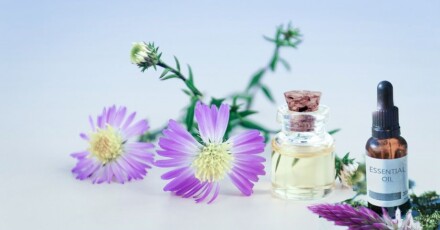
Essential oils are highly concentrated fragrant essences extracted from herbs, flowers, fruits, and other plants that give them their unique aromas.
They are commonly used in massage therapy, and aromatherapy to support a general feeling of well-being, working with both the mind and the body.
 How Essential Oils Work
Essential oils come from the process of hydrodistillation, steam distillation, solvent extraction, extraction under pressure, or other mechanical means of extracting oils from various parts of a plant, such as the roots, leaves, seeds, peels, bark, or blossoms.
The concentrated liquid extracts contain naturally occurring chemical compounds, including terpenes, esters, aldehydes, ketones, alcohols, phenols, and oxides.
The different chemical compositions affect the aroma of each essential oil and how it is absorbed and used by the body.
It can take 220 lbs of lavender flowers to make 1 lb of lavender essential oil or a thousand rose petals to make a rose oil.
Essential Oil and Aromatherapy
Most essential oils should be diluted first before use, this helps to spread the aromatic, concentrated molecules over a larger area, making it easier and more comfortable for the body to absorb.
Aromatherapy involves a very complex process with the Limbic system which is an area of the brain associated with smell and memory.
The olfactory nerves are located at the forefront of the brain and are responsible for sending signals about what we smell through to the Limbic System. This sensual information is then compared to that stored within the memory, and indeed the emotional response that went with that particular smell. This reaction then triggers a variety of chemical actions within the body, including the release of specific chemicals that relaxes, calms, or stimulates both body and mind.
Aromatherapy Massage
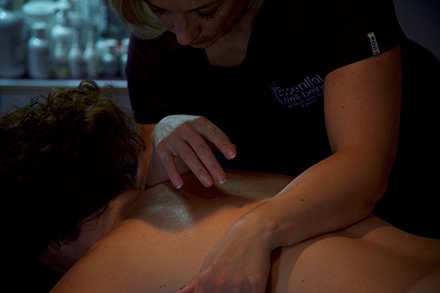 At essential well-being we blend our essential oils with carrier oils such as sweet almond oil, avocado oil, jojoba oil, or grape-seed oil for our body massages to suit the needs of our clients. We also use essential blends, additives and floral distillations throughout our facial treatments.
Massage is the primary method to enjoy aromatherapy as the therapeutic properties of the essential oils being used are absorbed by the skin but the soft tissues of the body are manipulated at the same time and can stimulate or aid relaxation dependent upon the oils selected.
The synergistic action of the essential oils, together with the physical and emotional benefits of touch, stimulate not only the organs in the body but the muscles, nerves and skin. The increased blood circulation and lymph flow assists with the cleansing of body toxins. After a massage some people experience a “healing crisis”. This is where the toxins are being expelled by the body and may cause headaches, excessive tiredness and more frequent urination.
Aromatherapy Inhalation
Through the practice of aromatherapy, essential oils are diluted in water and released into the air using a diffuser and inhaled as a fine mist of vapour.
Breathing in essential oil molecules may stimulate parts of your brain that influence physical, emotional, and mental health helping to;
Calm and relax, destress, soothe and balance, or stimulate, refresh, energise and uplift.
We diffuse essential oils throughout the clinic to create a relaxing environment, we recommend to diffuse essential oils over fragrance oils so that you benefit from the essential oil properties.
We offer a range of diffusers, Aromatherapy candles and essential blends in our Well-being shop.
Aromatherapy is considered a complementary and alternative medicine (CAM) and can be used to complement conventional treatments practiced by the mainstream medical community.
Most essential oils, unless they are specifically food-grade quality, are not to be ingested.